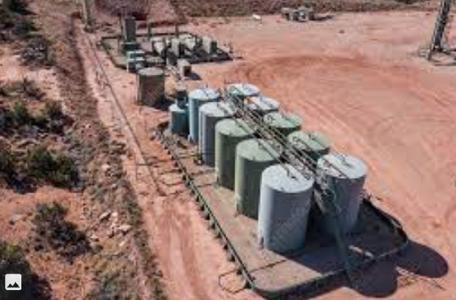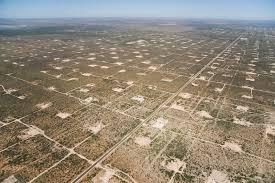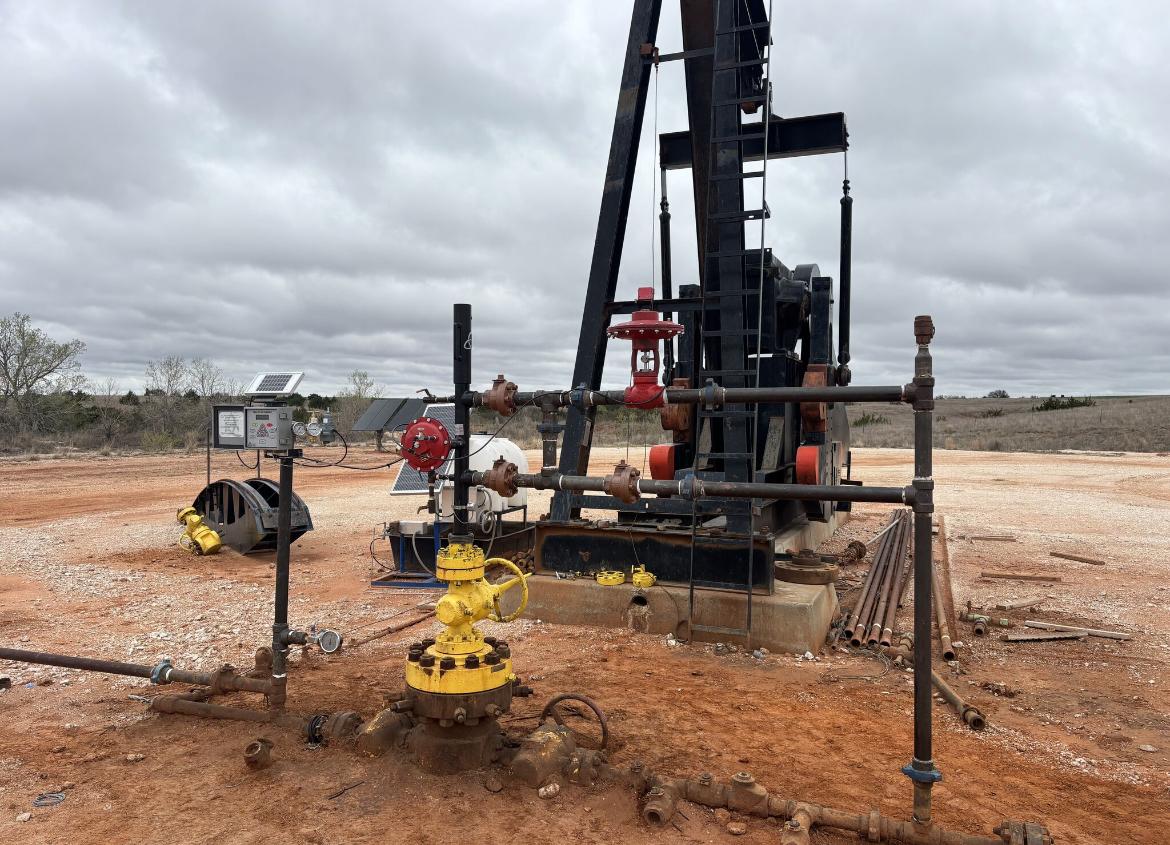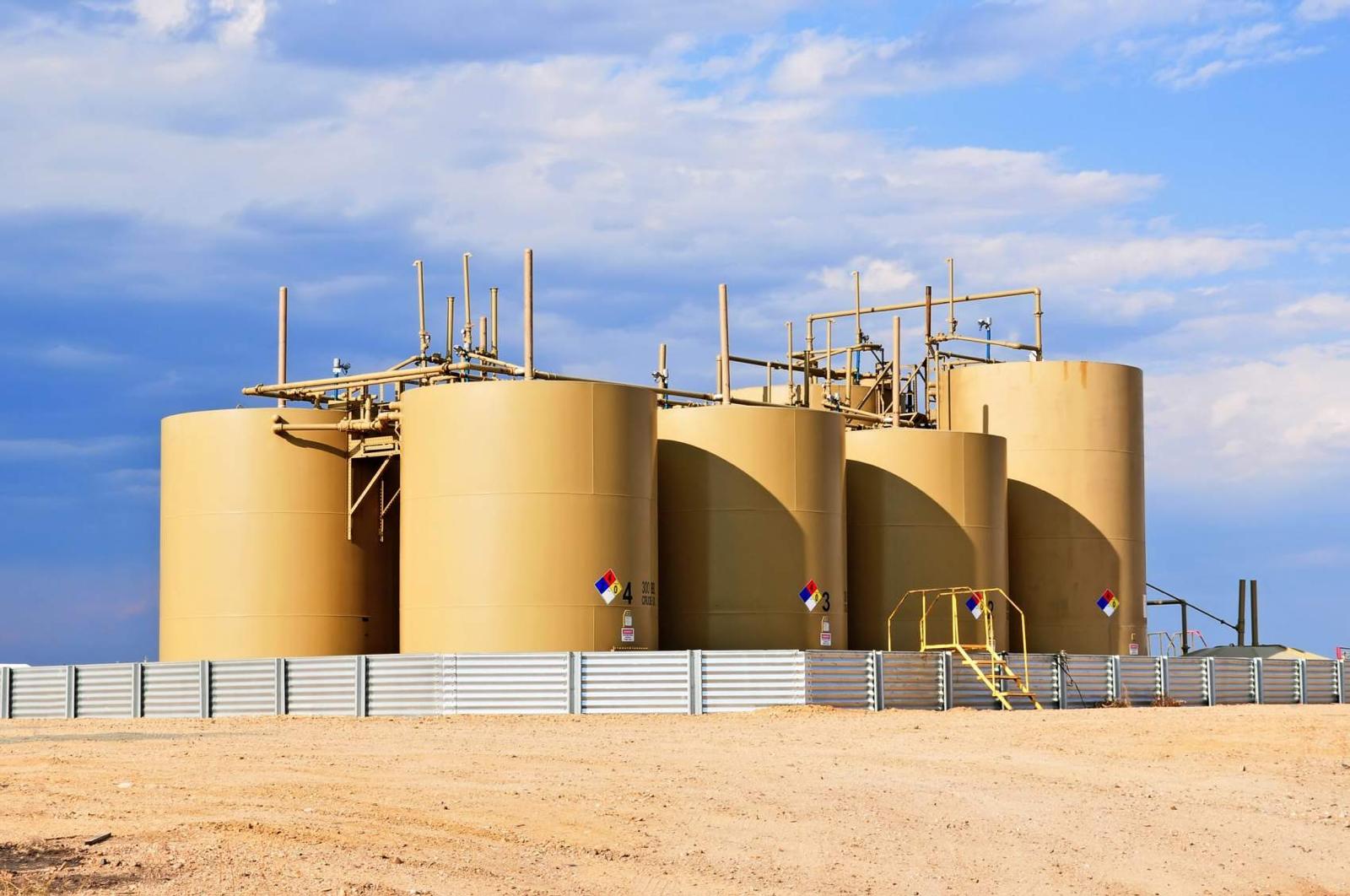
The platform that turns pipeline data into optimized operational action, protecting every barrel and every meter.
The Operational Gap: Fragmented Pipeline Intelligence
A pipeline operations team manages a complex system. Crude flows from gathering points through multi-stage compression, through treatment facilities, across transmission pipelines, and into storage or delivery points. Every segment has operating parameters — pressure, temperature, flow rate, viscosity, water content. Every segment has constraints — maximum allowable operating pressure (MAOP), minimum flow for efficient operation, line capacity, corrosion limits.
Managing all of this requires data from multiple sources:
- SCADA systems stream real-time operating data — pressures, temperatures, flow rates, compressor speeds, valve positions
- Hydraulic models predict how the system will perform under different conditions — where bottlenecks exist, what pressure drops are expected, what throughput is achievable
- Integrity assessments identify pipeline condition — internal corrosion, external coating damage, seam anomalies from past smart pig runs
- Maintenance schedules track what equipment has been serviced and when it's due for maintenance
- Historical performance data shows how the system actually behaved versus how models predicted it would behave
But here's the operational reality: these sources don't talk to each other.
A pipeline operations engineer manages this fragmentation manually. She looks at real-time SCADA data and notices pressure is 15 PSI higher than expected at a certain location. She pulls up the hydraulic model and compares actual operating conditions. She checks recent maintenance records to see if something changed. She reviews historical data to see if this is a new condition or normal variance. Then she makes a judgment call: Is this a problem? Should we adjust operating parameters? Should we dispatch a crew?
This synthesis happens on a case-by-case basis. Every anomaly requires manual investigation. Every operational decision requires pulling data from multiple systems and building context.
The result: pipeline operators are smart and experienced, but they're making decisions at the speed of human analysis. Anomalies that should be caught in minutes sit invisible for hours. Optimization opportunities that should be obvious go undetected. Throughput isn't maximized because constraints aren't systematized.
And more critically: the operator doesn't have a unified answer to a simple question: Given everything we know about this pipeline right now, what's the highest-value action to take?
The Product Vision: Unified Pipeline Intelligence
FlowSync is the operational intelligence platform built specifically for pipeline infrastructure. It connects all the fragmented pipeline data sources — flow data, hydraulic models, integrity assessments, maintenance schedules, historical performance — into a single operational intelligence layer that continuously answers: What should we be doing right now to maximize throughput, minimize downtime, and manage integrity risk?
FlowSync is not a SCADA replacement. It's not a hydraulic modeling tool. It's not an integrity management system. It's the synthesis layer that makes all of those tools work together operationally.
Think of it this way:
Your SCADA shows you what's happening right now. Your hydraulic model tells you what should be happening. Your integrity data tells you what constraints you're operating under. Your maintenance records tell you what work has been done. Your historical data tells you whether your predictions are accurate.
FlowSync connects all of these into a unified operational model that continuously asks: How is actual performance comparing to predicted performance? Where are the deviations? What's causing them? Which deviations matter most (economically)? What's the right action?
Key Capabilities: From Data to Action
1. Advanced Flow Optimization and Hydraulic Modeling
A pipeline system has inherent constraints. Certain segments have maximum operating pressures. Certain segments have minimum flow thresholds below which operation is inefficient or risky. Different operating scenarios (high throughput vs. low throughput, seasonal changes, commodity changes) drive different optimal operating points.
Traditional hydraulic modeling is a batch process: engineers build a model, validate it, run scenarios, deliver results. This takes weeks. The model is then used for long-term planning, not daily operational optimization.
FlowSync operationalizes hydraulic modeling. Real-time SCADA data feeds continuously into the hydraulic model. The model solves in real time — not once a month, but constantly. The platform shows operators: Given current operating conditions, what is the actual system behavior versus predicted behavior? Where are the discrepancies?
This enables real-time optimization. If the system is running 8 PSI lower than expected at a critical junction, the model can help identify why (is a valve partially closed? Is there unexpected friction loss? Is a piece of equipment operating outside spec?) and suggest the adjustment that would recover throughput.
For a typical high-throughput pipeline, recovering even 2-3% of constrained capacity is tens of millions of dollars annually. FlowSync surfaces that opportunity and automates the analysis that would otherwise take a hydraulics engineer hours.
2. Real-Time Leak Detection and Anomaly Identification
A leak in a pipeline is expensive. It's lost product, lost revenue, regulatory violation, environmental remediation, and operational disruption. The longer the leak goes undetected, the more it costs.
Traditional leak detection uses specialized equipment — either portable detection instruments that crews carry in the field, or fixed sensors at specific locations. Either way, detection is periodic or localized.
FlowSync uses continuous SCADA data to identify anomalies indicative of leaks. A sudden pressure drop in a segment when no operational change occurred. A flow imbalance — more product entering a segment than leaving it. Temperature anomalies that suggest product escape.
FlowSync doesn't replace traditional leak detection equipment. It augments it with continuous automated monitoring. When anomalies are detected, the platform alerts operations teams with:
- Location: Where in the pipeline the anomaly appeared
- Severity: How significant is the deviation from expected behavior
- Type: Is this consistent with a leak, or with a valve position change, or with equipment malfunction?
- Recommended action: Dispatch a crew for visual inspection vs. analyze further vs. adjust operations
This dramatically reduces time-to-detection and narrows the area crews need to survey, making leak identification faster and more cost-effective.
3. Predictive Maintenance Scheduling for Pipeline Assets
Pipeline infrastructure includes pumps, compressors, control valves, measurement instruments, and other equipment. All of it deteriorates. The question is: when?
Traditional maintenance is either schedule-based (every 6 months, every 10,000 operating hours) or failure-based (run it until it breaks, then fix it). Schedule-based maintenance might replace parts that still have useful life. Failure-based maintenance means downtime and emergency response.
FlowSync analyzes SCADA data for signs of equipment degradation. Compressor vibration trending. Valve response time slowing. Pump efficiency declining. Measurement instrument drift.
By monitoring these trends, FlowSync predicts maintenance need before failure. A compressor bearing temperature trending upward suggests wear. The platform can forecast when the bearing will likely need replacement — maybe in the next 30 days, maybe in the next 6 months — based on the rate of degradation.
This enables proactive maintenance planning. Instead of schedule-based maintenance that might be premature, or failure-based maintenance that means emergency response, you have predictive maintenance that's timed to actual asset condition.
For a pipeline operation, the difference between planned maintenance and emergency failure is often 6-12 hours of downtime. Multiply that across dozens of assets, across a year, and the cost difference is millions.
4. Throughput Maximization Through Constraint Identification
A pipeline system has one binding constraint at any given time — the bottleneck that limits throughput. Maybe it's a compressor that can't push any harder. Maybe it's a valve that's partially closed. Maybe it's a pipeline segment operating at maximum allowable pressure. Maybe it's meter capacity or storage tank capacity downstream.
Identifying the constraint is the job of a hydraulic engineer, and it requires analysis. Removing the constraint — even temporarily — requires coordinating operations, maintenance, and potentially capital projects.
But what if you could identify the constraint continuously, in real time?
FlowSync does exactly that. By running continuous hydraulic analysis against real-time operating data, the platform identifies:
- What is the current system bottleneck?
- How much throughput are we losing because of this constraint?
- What would it take to remove it? (operate a valve differently, run a compressor faster, clean a line, adjust setpoints)
- How much would that throughput improvement be worth?
In some cases, the answer is "deploy a crew to clean this line segment, which will improve throughput by 2% and generate $400K in additional revenue this month." That work gets priority.
In other cases, the answer is "this constraint requires capital work, but here's how to operate more efficiently within it to recapture 1% throughput."
Either way, the platform makes the constraint visible and economically quantified, so operations teams can make data-informed decisions about where to invest effort.
5. Pipeline Integrity Management With Economic Prioritization
Pipeline integrity management is regulatory and risk-driven. You have regulations (49 CFR 192/195) that require specific inspections, maintenance, and integrity assessments. You have risk — the consequence of a failure varies wildly depending on the location (high-consequence vs. rural), the commodity (crude vs. water), and the infrastructure upstream (critical vs. non-critical).
Traditional integrity management assigns tasks based on regulation and aging criteria. Every X years, you smart-pig the line. Every Y years, you conduct a mechanical integrity audit. Every Z years, you inspect cathodic protection.
FlowSync layers economic and risk context onto integrity operations. A pipeline segment that's older doesn't automatically become higher priority. But if that segment is in a high-consequence area and is showing early signs of internal corrosion and would be catastrophically expensive to fail, then it becomes Priority #1.
Conversely, an aging segment in rural terrain with low consequence, no signs of degradation, and lower failure impact gets lower priority.
The result: your integrity resources — pigging crews, inspection teams, cathodic protection technicians — are allocated to the work that prevents the most expensive or highest-risk failures, instead of being spread across a calendar-driven schedule.
Integration With the Broader OPS Platform
FlowSync is built as a module within the WorkSync operational intelligence ecosystem.
While PipelineOPS focuses on work orchestration — answering "what field work should we prioritize?" — FlowSync focuses on operational optimization — answering "how should we operate the pipeline to maximize throughput and manage integrity?"
They share the same economic prioritization engine. A FlowSync insight that identifies a constraint could trigger a PipelineOPS work order. A PipelineOPS maintenance task that gets completed feeds back into FlowSync to validate predictions and improve models.
They share the same data architecture. Real-time SCADA integration, hydraulic model integration, integrity assessment integration, asset metadata — all of it flows through the unified WorkSync data model.
And critically, they share the same closed-loop learning approach. FlowSync's predictions about equipment degradation or constraint location are validated against what actually happened. If the prediction was wrong, the model retrains. Tomorrow's predictions are better because they incorporated today's operational reality.
Who Benefits: How Daily Work Changes
Pipeline Operations Engineers
Before FlowSync: An engineer monitors SCADA in real time, trying to spot anomalies and identify constraints. When something looks off, she investigates manually — pulling hydraulic models, reviewing historical data, building context. Most of her time is reactive: responding to anomalies that have already appeared.
After FlowSync: The platform does the anomaly detection and initial analysis automatically. Engineers get anomalies surfaced with context. They can focus on high-impact decisions: Should we adjust setpoints to recapture this throughput? Should we prioritize this maintenance? Is this constraint worth addressing? Engineers shift from reactive investigation to strategic decision-making.
Pipeline Integrity Managers
Before FlowSync: Integrity work is scheduled based on regulation and asset age. Crews inspect, maintain, and monitor on a predetermined calendar. It's proactive in the sense that it's planned ahead, but it's not adaptive. If a new risk emerges, the schedule doesn't change.
After FlowSync: Integrity tasks are prioritized based on actual risk — assessed from real-time asset condition, historical performance, location consequence, and failure impact. An emerging corrosion issue gets bumped up. A segment showing no degradation can be pushed out. Labor allocation is dynamic and risk-driven instead of calendar-driven.
Field Operations Supervisors
Before FlowSync: A supervisor dispatches crews based on work orders in the CMMS and operational requirements flagged by engineering. The dispatcher doesn't have clear visibility into which work is most impactful or whether crews are being routed efficiently across the pipeline network.
After FlowSync: The platform feeds prioritized, route-optimized work directly to the dispatcher. Crews know not just what to do, but why they're doing it — how much revenue the work protects, what risk it mitigates. Drive time is minimized. Asset uptime is prioritized explicitly.
Executive Leadership
Before FlowSync: Leadership sees dashboards with KPIs: uptime, throughput, safety metrics, maintenance spend. But they don't see the operational drivers behind those metrics, or how operational decisions connect to financial outcomes.
After FlowSync: Leadership sees operational performance in economic terms. A throughput constraint is surfaced with its financial impact. A pending maintenance issue is shown with the cost of failure if ignored. A crew schedule is visible with the throughput and risk outcomes. Operations become transparent and connected to business outcomes.
The Architecture: Unified, Real-Time, Continuously Learning
FlowSync is built on the same technical architecture as the broader WorkSync platform:
Data Integration Layer: SCADA, historians, hydraulic models, integrity assessments, CMMS, asset metadata — all flow into a unified data model continuously.
Anomaly Detection Engine: Real-time analysis of operating data against historical baselines and hydraulic models. When behavior deviates significantly from expected, anomalies are flagged with severity, location, and type.
Predictive Modeling: Equipment performance data is analyzed for signs of degradation. Trends are modeled to forecast remaining useful life or time-to-failure.
Optimization Engine: Continuous hydraulic analysis solves for current constraints, throughput recovery opportunities, and operational efficiency. Economic impact is calculated for each optimization opportunity.
Priority Scoring: All insights — anomalies, predictions, optimization opportunities — are scored by economic impact and risk exposure, ranked for action.
Mobile Work Integration: Insights translate into work orders that feed to PipelineOPS for crew dispatch and execution.
Closed-Loop Learning: Predicted vs. actual outcomes are continuously compared. Models retrain nightly based on what actually happened versus what was forecast.
Real Impact: Throughput Maximization and Risk Mitigation
The financial impact of intelligent pipeline operations shows up in multiple ways:
Throughput Recovery: Identifying and removing constraints typically recovers 2-5% of constrained throughput. For a high-throughput pipeline, this is $200K-$2M annually.
Maintenance Optimization: Shifting from schedule-based to predictive maintenance reduces premature maintenance by 20-30% while catching problems before failure. Cost savings: $100K-$500K annually for a typical operation, plus avoided downtime.
Leak Detection: Faster anomaly identification reduces time-to-detection from hours to minutes. Less product lost, faster remediation, reduced regulatory exposure.
Operational Availability: Preventing failures through early identification and proactive maintenance means more uptime. For a pipeline that generates $100K per day of revenue, preventing one 24-hour outage is $100K in revenue protection.
Risk Management: Integrity work prioritized by actual risk instead of schedule means the most consequential failures are prevented first. This reduces regulatory violation risk, environmental liability, and catastrophic failure consequence.
The Bigger Picture: From Monitoring to Optimization
Most pipeline operations today have achieved good monitoring. SCADA is deployed. Alarms are set. Data flows. What most operations haven't achieved is operationalized optimization — the continuous translation of operational data into prioritized field action.
FlowSync closes that gap.
It's the difference between knowing your pipeline is operating suboptimally and seeing where, why, and what you can do about it. Between detecting anomalies days after they appear and identifying them in real time. Between scheduling maintenance on a calendar and prioritizing it based on actual risk.
It's the difference between operations teams managing complexity and operations teams optimizing performance.
The Path Forward
FlowSync is being built in partnership with leading pipeline operators. If your organization manages critical pipeline infrastructure and wants to see the operational and financial impact of unified intelligence — anomaly detection, predictive maintenance, throughput optimization, integrity prioritization — working together in real time, the next step is straightforward.
Request a FlowSync demo. See how real-time flow data, hydraulic models, and integrity assessments combine into operational guidance that changes how your teams work.
See how pipeline infrastructure doesn't have to be managed reactively. It can be optimized, continuously, with economic clarity and risk transparency.