It's 10:30 AM on a Tuesday. Your 3D digital twin is rendering perfectly in the control center — a photorealistic model of your processing facility with live data streaming into every pipe and pump. Your VP comes by, sees it, and asks the obvious question: "So what do we do with this?"
That's the problem with most digital twins in energy operations. They're beautiful. They're expensive. They're exactly what was promised in the PowerPoint presentation to the board. And they rarely change how field teams actually work.
The real crisis isn't visualization. It's decision-making. Every morning, someone in your operation wakes up knowing there are problems to solve but not knowing which ones matter most. A well is declining. A compressor is running inefficiently. A pipeline segment is seeing unexpected pressure drops. A work order has been sitting for three weeks. A maintenance interval is due. A permit is about to expire. Any of these could be costing you money. All of them are competing for the same crew's attention. But how much is each one worth?
A static digital twin can show you all of this at once. It cannot tell you what to do about it.
From Models to Maps to Economics
The digital twins that actually change operations share a common characteristic: they answer a different question every single day.
This is the distinction between a digital twin you look at and a digital twin that tells you what to do. The first is a model. The second is an economic instrument.
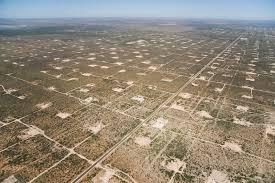
Consider how an oil and gas operation actually works. You have hundreds or thousands of production assets generating telemetry. You have maintenance requirements. You have financial constraints. You have safety obligations. You have staffing limitations. You have geographic routing challenges. Every variable interacts with every other variable. The number of possible operational states is astronomically large. And every morning, your field team has to choose which 5% of possible actions to actually execute.
The standard approach is to make that choice the way it's always been made: through experience, habit, and whatever visible crises demand immediate attention. A well trips offline, an alarm fires, a piece of equipment sounds wrong — these become the drivers of field activity. Economic value doesn't enter the equation until the damage is already done.
A digital twin that matters changes this. It continuously models your operational reality — every well's cash flow production, its maintenance state, its risk exposure, its economic profitability. It does this not through 3D graphics but through economic simulation. It scores every possible task in your operation on a unified scale: the dollar impact. It then generates a priority sequence and routes it to your field teams before they start their trucks.
This is what a living digital twin looks like: a continuously recalibrating economic model that drives daily decisions.
What's Actually Inside
A living digital twin in energy operations runs on a few core components, none of which require new hardware:
Unified data ingestion. Your SCADA systems, production accounting, CMMS, ERP, and financial forecasting feed a common data layer. No rip-and-replace of existing systems. The digital twin reads from what you already have.
Physics-based modeling. For production assets, the model simulates decline curves, lifting dynamics, fluid behavior, and system response. For infrastructure, it models flow dynamics, pressure profiles, and capacity constraints. These models stay synchronized with real conditions through continuous telemetry feeds.
Economic scoring. Every production deviation is translated into a cash flow impact. A well declining 5 barrels per day due to a stuck plunger isn't just a "well issue" — it's a $2,000-per-day cash flow loss (at current pricing). A compressor running at 88% of design efficiency isn't just an anomaly — it's a specific dollar impact on throughput and fuel cost. These become the currency of operational decision-making.
Real-time prioritization. The digital twin doesn't just model your operation. It continuously ranks every issue by economic impact, production criticality, execution feasibility, safety risk, and operational urgency. This priority sequence is live and updates as conditions change.
Dynamic routing. Prioritized work flows to field teams assigned based on geographic proximity, skill match, certifications, equipment access, and workload. The routing engine minimizes non-productive time while maximizing economic return per route. This happens automatically, every morning, before crews leave the yard.
Closed-loop validation. Every completed task feeds back into the system. Predictions are compared against actual outcomes. The model improves with every data point. Your operation gets more intelligent every day.
The Operational Shift This Creates
The difference between a static digital twin and a living one shows up immediately in how work gets prioritized.
A well is producing 5% below forecast. Your SCADA shows normal pressures and good output — there's just a differential that doesn't match the model. With a static digital twin, someone flags this as an anomaly. With a living digital twin, the system calculates that this variance, if it continues for 30 days, represents a $28,000 cash flow loss. It then checks maintenance records and finds that the artificial lift system is six months overdue for servicing. It checks crew availability, calculates drive time to the well, and determines this is a 4-hour job. It then scores all 47 other issues competing for crews that morning against this one.
Maybe this well ranks fourth in your priority queue. Maybe it ranks 28th. But the ranking isn't based on when the alarm fired or whose well it is or how long the work order has been sitting. It's based on what that decision is actually worth to your cash flow.
A pipeline segment sees unexpected pressure loss. A static digital twin shows you the deviation. A living digital twin runs a diagnostic flow model showing four possible causes, calculates the cost of each scenario continuing for different time periods, and prioritizes the most likely high-cost problem. It flags that a crew with recent hydraulic modeling training is available, is 45 minutes from the segment, and has capacity for a 3-hour investigation. The system suggests this crew and explains why.
A maintenance permit is about to expire on a critical compressor. A living digital twin knows the permit expiration triggers a 72-hour shutdown requirement if maintenance work isn't completed. It calculates the production loss of that shutdown, the cost of the maintenance task, and the time window remaining. If the window is closing, the system surfaces this aggressively despite the task not being high-dollar-impact on its own. If the window is open, it deprioritizes the task and suggests the optimal time to execute it alongside other work.
This shift from static observation to dynamic decision-making is the real transformation. You go from "look at what's happening" to "here's what matters most, and here's the optimized plan to address it."
Why Static Twins Can't Do This
The limitations of traditional digital twins are not technical. They're architectural.
A 3D digital twin is inherently a visualization tool. It's designed to make complex information perceivable to the human eye. That's valuable for certain things — understanding facility layout, planning capital projects, training new operators, communicating design intent. But visualization and decision-making are different functions.
A static model also can't absorb the economic context that matters in operations. Economic value depends on current market conditions, well-specific profitability, maintenance history, crew availability, geographic routing, competitive priorities, and risk constraints. These variables change daily. A fixed model that was accurate on Tuesday is potentially misleading by Thursday.
Additionally, static twins are typically built once and maintained thereafter. They require expertise to update — someone with CAD skills, domain knowledge, and time. This creates a natural lag. Your physical infrastructure changes faster than your 3D model reflects.
A living digital twin is the opposite. It's built to be continuously current. It doesn't require experts to maintain it because it updates from your operational data automatically. It absorbs changes in market conditions, staffing, equipment availability, and priorities in real time.
The Integration with Your Existing Systems
A living digital twin doesn't require replacing your SCADA, your CMMS, your ERP, or your production accounting system. It reads from all of them. It normalizes the data they generate into a common operational language. It then answers a question none of these systems was designed to answer: "Given everything happening right now, what should our field teams actually be working on?"
This is why digital twin architecture matters. The best industrial digital twins are not standalone systems. They're orchestration layers that sit above existing systems, learn from them, and drive better decisions through them.
From Nice-to-Have to Mission-Critical
Over the next three years, the economics of energy operations will make digital twins mandatory. Operations already running on thin margins won't be able to afford reactive work. The cost of deferred production — missing the window to fix a well, letting a pipeline inefficiency compound, keeping crews on low-value tasks — will be too high to accept.
The operators who thrive will be the ones who transition from looking at their operations to thinking about their operations. A digital twin that shows you what's happening is interesting. A digital twin that continuously tells you what to do is a competitive advantage.
The question isn't whether you'll have a digital twin. The question is what kind you'll build: one that looks impressive on a screen, or one that changes how your operation runs.
Ready to See Your Operation Through a Living Digital Twin?
WorkSync's WellOPS is built as a living economic model of every well, pipeline, and asset in your portfolio. It continuously reflects operational reality — current production, maintenance state, risk exposure, financial impact — and generates prioritized, route-optimized field work every morning at 6 AM. No spreadsheets. No guessing. Just clarity on what matters most.
See how it works in your environment.