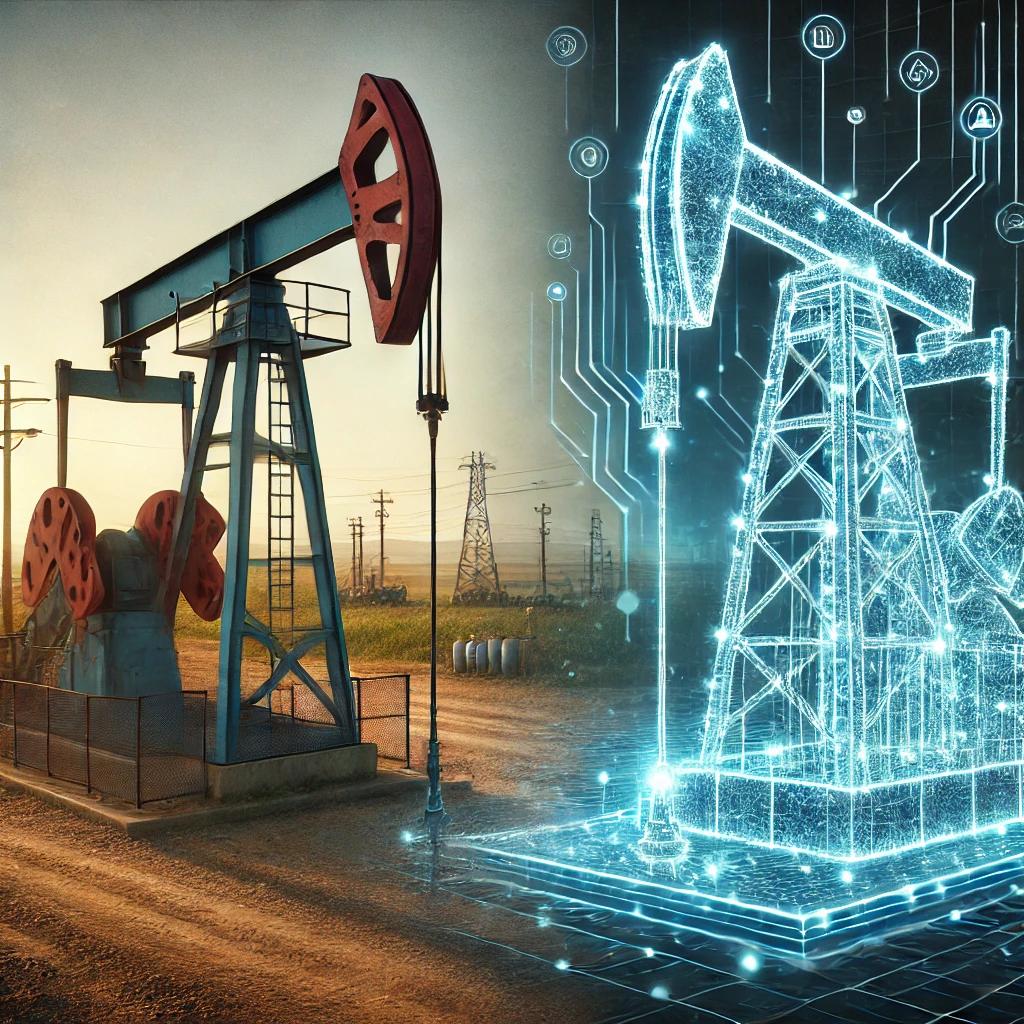
Your Engineers Are Building Models by Hand.
FlowSync Eliminates That Entirely.
FlowSync automates the creation, calibration, and maintenance of hydraulic infrastructure models — turning weeks of manual engineering into minutes of automated processing.
See FlowSync in ActionThe Engineering Time Tax
Today, building a hydraulic model means exporting GIS data, manually re-keying it into simulation software, running trial-and-error calibration against measured data, and repeating the process every time conditions change. A single model build takes 2–4 weeks. By the time it’s ready, business conditions have already changed.
Your engineers — the most expensive, hardest-to-replace people in your organization — spend 60–80% of their time on data preparation instead of analysis. FlowSync gives them that time back.
How FlowSync Works
Four automated steps replace weeks of manual engineering work.
Auto-Extract Network Topology
Reads network structure directly from GIS. No manual digitization.
Auto-Ingest Operational Data
Connects to SCADA for live pressures, flows, and temperatures.
Auto-Tune Hydraulic Parameters
Calibrates friction factors, heat transfer, and fluid properties against measured data.
Generate Simulator-Ready Outputs
Exports in native format for HYSYS, PipeSim, Synergi, and 12+ other platforms.
What FlowSync Can Model
Multiphase Flow
Gas, liquid, and multiphase flow in gathering systems and pipelines.
Facility Throughput
Processing plant and facility capacity analysis under varying conditions.
Compressor Modeling
Compressor performance curves, fuel consumption, and station optimization.
Hydraulic Analysis
Pressure drop, velocity, and flow distribution across complex networks.
Scenario Modeling
What-if analysis for expansion planning, constraint identification, and contingency assessment.
Where you used to run 2–3 scenarios per quarter, FlowSync enables 100+ — giving engineers the freedom to actually explore.
Purpose-Built for Energy Infrastructure
Upstream
Well production optimization, flowline hydraulics, gathering system constraints, artificial lift analysis.
Midstream
Pipeline hydraulics, compressor performance, capacity planning, flow assurance, gas quality tracking.
Gas Utilities
Distribution network modeling, seasonal demand analysis, supply disruption scenarios, pressure management.
Exports to Every Major Platform
Process & Facility
HYSYS, UniSim, WinSim, ProMax, Petro-SIM
Pipeline & Flow
Synergi, OLGA, PipeSim, AFT Fathom, EPANET
Mechanical
CAESAR II, AutoPIPE
FlowSync exports in native format. Engineers open and run — no translation layer.
The 95% Claim — Here’s What’s Behind It
Building a hydraulic model has 8 steps: (1) export GIS, (2) digitize topology, (3) assign pipe properties, (4) define fluid compositions, (5) import operating data, (6) calibrate parameters, (7) validate against measured data, (8) run analysis.
FlowSync automates steps 1 through 6 completely. Engineers start at step 7 — validation and analysis. That’s where their expertise actually matters.