Where operational intelligence failures compound into millions in annual leakage.
The Industry Pattern
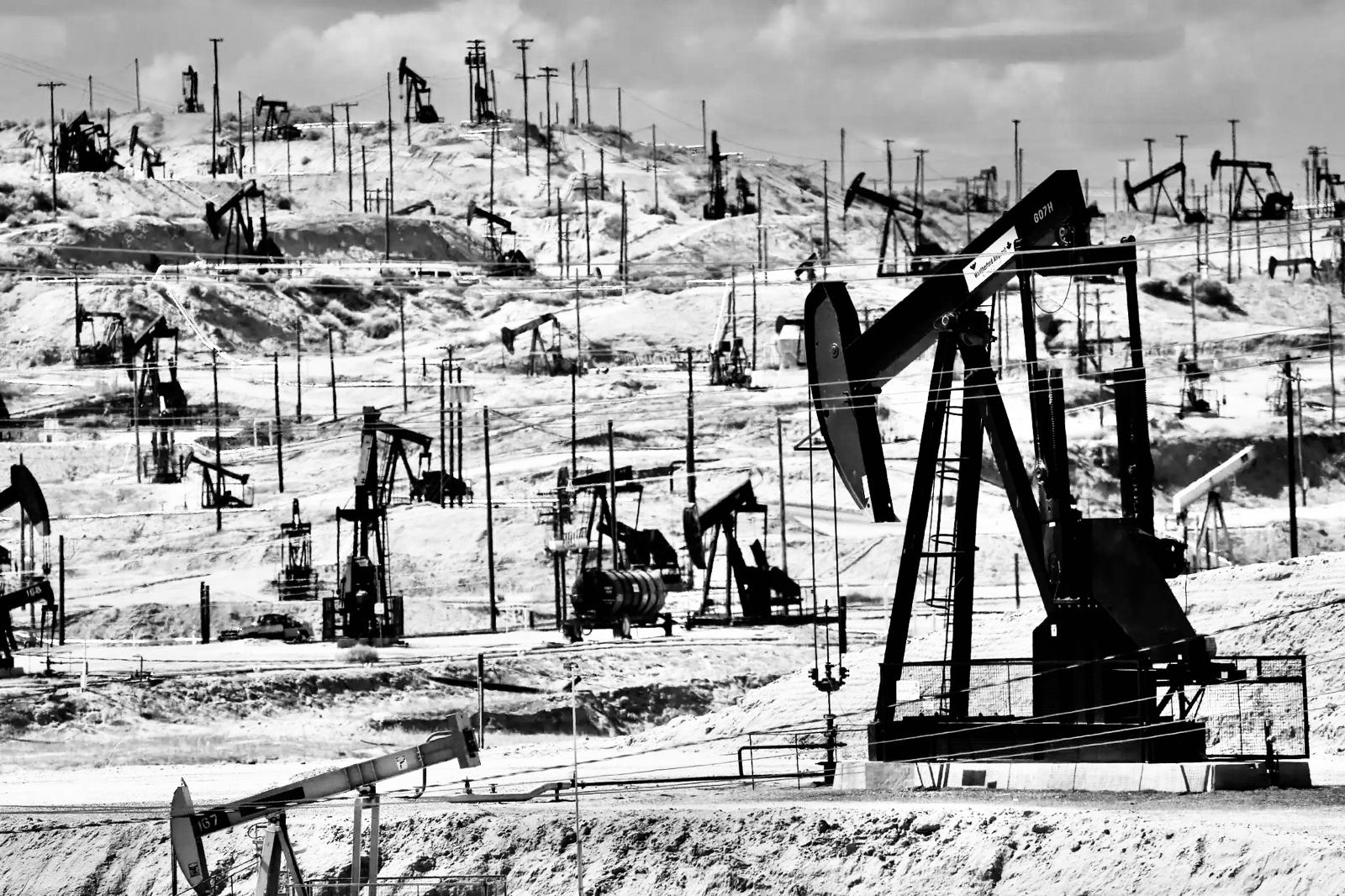
A leading upstream operator in the Western Anadarko Basin — managing 1,800+ wells across a complex, stacked-pay portfolio — was chasing the same performance targets as everyone else in the space: maximize production from existing assets, reduce lifting costs, improve capital efficiency.
They'd already done the right things. Ten million dollars in SCADA investment. Advanced pump-by-exception systems. Predictive models. Data integration projects. All the expected moves.
And yet, when they looked at cash flow per BOE, per crew member, per dollar of field asset — they were behind where they should have been.
They brought in a team to diagnose why.
The answer wasn't equipment or talent. It was operational design. Despite sophisticated data collection, sophisticated forecasting, and sophisticated systems, there was a massive gap between what the company could optimize and what it actually was optimizing.
That gap — quantified across their operation — amounted to about 15% of operational cash flow annually.
This number matters because it's not unique to that operator. It's an industry pattern.
Where the 15% Leaks
That 15% annual cash-flow leak doesn't happen all at once. It compounds from structural inefficiencies that are invisible until you map them out.
1. Deferred Production (4-5% impact)
A well starts declining. The decline is visible in SCADA data. Your engineering models flag it. But because there's no system converting that signal into prioritized field action, the well doesn't get visited until its scheduled rotation — which might be 3-7 days away.
By then, the decline has compounded. A 20% decline becomes a 40% decline. Production that should have been recovered in 24 hours becomes lost for a week. The cash-flow delta accumulates.
Multiply this across a portfolio. If you have 300 wells and 10-15% of them experience a deferral event each month (a decline, an alarm, an anomaly that should trigger immediate response), and 30-40% of those deferrals are caught reactively rather than proactively, you're looking at:
- 15 wells per month experiencing preventable deferred production
- Average deferral period: 5 days
- Average production impact: 25-30% per well
- Average production value: $2,000-3,000 per day
Monthly impact: ~$2.25M in deferred production value Annual impact: $27M (in a 1,800 well portfolio)
As a percentage of total cash flow from lift-off production (typically 60-70% of portfolio production): 4-5% leak
2. Reactive Maintenance and Redundant Fieldwork (3-4% impact)
When you're reactive, you fix problems after they cascade. A well fails. An alarm fires. A tank overflows. The response is urgent and inefficient. You dispatch crews specifically for the problem. You might send multiple crews because nobody knows exactly what the issue is. You spend resources on triage that should have been spent on prevention.
When you're proactive, you catch issues before they cascade. A trend shows up. You address it at the source. One crew visit instead of three. Planned work instead of emergency response.
The operational difference is dramatic:
Reactive model: Problem occurs → escalation → emergency crew dispatch → triage → repair = high labor cost, high downtime, inefficient routing
Proactive model: Trend detected → prioritized schedule → planned crew visit → prevention/early repair = lower labor cost, minimal downtime, efficient routing
For the same well, the proactive approach costs 40-50% less and results in less downtime.
Now factor in redundancy. When there's no coordinated view of field activity, crews visit the same well multiple times without full context. Crew A checks it on Tuesday. Crew B checks it on Wednesday. Crew C checks it on Friday. Each crew spends time, burns fuel, uses NPT. The work is redundant.
In a typical operation, 15-20% of field site visits are redundant or could have been consolidated. For a 1,800-well operation with 150+ visits per week, that's:
- 25-30 redundant visits per week
- $150 per visit average cost (fuel, labor, opportunity)
- ~$4,000 per week in preventable waste
- ~$210K per year
That's just the direct cost. The opportunity cost — crew time that could have been spent on high-value work — is larger.
More critically, reactive maintenance creates a cost structure that's unsustainable. An operation where 40% of field activity is reactive firefighting is an operation that's continuously over-resourced (because resources have to handle peaks) and under-optimized (because resources aren't allocated to highest-value work).
Annual impact: 3-4% of operational cash flow
3. Route Inefficiency and Non-Productive Time (2-3% impact)
Route inefficiency is invisible until you map it. Most operations build routes based on well rotation, geography, and crew availability. But they don't optimize routes by:
- Actual economic value of each well
- Interdependencies between tasks
- Real-time drive-time matrices
- Crew-specific capabilities and constraints
The result: crews drive more than they should and work on lower-value wells because those wells happen to be on their geographic route.
A typical crew covers 8-12 wells per day. If a crew is spending 35-40% of their time driving (NPT) instead of working (15-20% is reasonable), that's significant waste.
For a 40-crew operation:
- Average crew NPT (non-productive time): 35% of shift
- Optimal NPT target: 18% of shift
- Delta: 17% of shift time
- Cost per crew: ~$35,000 per year
- Portfolio impact: $1.4M per year
But the bigger cost is opportunity. If a crew is driving 35% of their time, they're only working 65%. If they were working 82% (with only 18% NPT), they'd be doing 25% more work. Not all of that capacity gets utilized (crews need rest, regulatory constraints exist), but 10-15% of that capacity typically converts to additional high-value work.
For a 40-crew operation at $100K+ per crew deployed cost, that's another $400K-600K per year in lost productive capacity.
Annual impact: 2-3% of operational cash flow
4. Operational Inventory Management and Hauling Inefficiency (2-3% impact)
Most operations schedule hauling based on fixed cycles: Tank gets pumped every 7 days, every 10 days, whatever. But production varies. Wells decline. Production shifts. Fixed hauling schedules become mismatched to actual production patterns.
The result: tanks that should have been pumped Friday aren't pumped until Monday (lost production). Tanks that don't need pumping until next week get pumped today anyway (wasted truck time).
When you lack real-time visibility into tank levels, production rates, and hauling economics, you default to a conservative strategy: more hauling, less risk of overflow, but lower efficiency.
A well producing 20 BBL/day gets hauled on a 7-day rotation. It overflows on day 6. You're pumping it before it's economically optimal. Meanwhile, a well producing 80 BBL/day on a fixed rotation runs close to the edge, and you're constantly managing overflow risk.
The inefficiency manifests as:
- Excess hauling capacity deployed (truck trucks, not fully loaded)
- Sub-optimal visit timing (hauling wells that don't need it)
- Overflow events (production loss when tanks fill faster than forecast)
- Overtime and emergency hauling (higher cost)
For a 1,800-well operation with average daily production of 3,000 BOE, optimal hauling vs. reactive hauling typically shows a 5-8% difference in total liquid handling cost.
Annual impact: 2-3% of operational cash flow
5. Engineering Inefficiency and Analytical Work Backlog (2-3% impact)
This is the one leaders feel most acutely but struggle to quantify.
Your best engineers spend 30-50% of their time building context: pulling data from systems, cleaning spreadsheets, recreating asset hierarchies, answering "what's the status of well X?" questions.
The work they should be doing — optimization, scenario modeling, strategic analysis — gets deferred or compressed.
When you have no integrated system surfacing economic priorities automatically, engineering time gets allocated to triage instead of optimization. A problem surfaces in the field. Engineering gets pulled in to diagnose. They spend a week building a model, analyzing the issue, recommending a solution. By then, the problem has cascaded.
An integrated system that automatically surfaces problems and prioritizes them economically means engineering time gets allocated strategically, not reactively.
The productivity impact is significant:
- 40% of engineering time freed from data-building and triage = 2-3 engineers' worth of capacity on a 10-engineer team
- High-performer engineers (at $150K+ compensation) freed for strategic work = exponentially higher value per dollar spent
- Engineering recommendations that are strategically prioritized rather than reactively triggered = higher-impact decisions
The financial benefit is harder to quantify directly, but empirically, engineering-led optimization initiatives (when they're not interrupted by firefighting) typically generate 3-5% production uplifts or 2-3% OpEx reductions.
An operation where engineering is freed to do engineering work — strategic optimization rather than reactive troubleshooting — shows measurably better technical performance.
Annual impact: 2-3% of operational cash flow
How the 15% Compounds
Sum these inefficiency categories:
- Deferred production: 4-5%
- Reactive maintenance + redundant work: 3-4%
- Route inefficiency + NPT: 2-3%
- Inventory and hauling: 2-3%
- Engineering allocation: 2-3%
Total: ~13-18% of annual cash flow
For a mid-sized upstream operation with $100M in annual operating cash flow, that's $13-18M in annual leakage from operational inefficiency.
For an operation with $500M in cash flow (larger operator), that's $65-90M.
This isn't theoretical. It's based on comparative analysis between reactive operations and optimized operations in the same geologic setting, same market conditions, same asset base.
Why This Gap Exists
The structural reason is straightforward: Most operations are optimized around data collection and reporting, not operational execution.
You have systems that generate data (SCADA). You have systems that analyze data (forecasting, modeling). You have systems that track execution (CMMS, production accounting). But you're missing the system that connects data to execution — the intelligence layer that says "given everything we know, here's what we should do right now, and here's how to do it efficiently."
Without that layer, operational decisions default to sub-optimal proxies:
- Rotation instead of economics
- Urgency instead of impact
- Convenience instead of value
- Procedure instead of optimization
Each of these is rational in isolation. But across a portfolio and a year, they compound into millions in leakage.
What Changes When You Close the Gap
The Western Anadarko operator that diagnosed this gap implemented an integrated system designed to close it. They focused on:
- Unified data integration: SCADA, production accounting, work orders, GIS, asset data — all flowing into a single operational context
- Economic prioritization: Every piece of work scored by cash-flow impact, not urgency or rotation
- Optimized routing: Field teams getting routes that minimize drive time while maximizing value per route
- Closed-loop feedback: Plans compared against actuals, forecasts validated against results, models improving nightly
The results in the first 90 days:
- +15% gross cash flow improvement
- -70% oil and water inventory reduction
- -25% reduction in operational miles driven
- Faster recovery of deferred production
- 50% reduction in mean time to resolution for economic well issues
- Improved crew morale and accountability
The 15% cash-flow lift matched the diagnostic. When you close the operational execution gap, cash flow compresses and margins improve.
The Implication for Your Operation
The 15% leak isn't unique to that operator. It's an industry-wide pattern that shows up across upstream, midstream, and utility operations. Operators are data-rich but execution-poor. Information is fragmented but actionable guidance is missing.
If your operation shows similar characteristics — field teams building schedules manually, reactive maintenance, variable route efficiency, engineering bottlenecks, deferred production cycles — you're likely experiencing a similar leak.
The path forward isn't more data collection or better forecasting. You probably already have good data and good forecasts. The gap is the execution layer — the system that connects that intelligence into prioritized, routed, coordinated field action.
Close that gap and the 15% typically follows.
Calculate your operational cash-flow leakage. WorkSync diagnoses where efficiency gaps exist in your operation — deferred production, route inefficiency, reactive maintenance, and engineering bottlenecks — and shows you the path to recapture operational cash flow through economic prioritization and closed-loop execution.